Food & Style
The olive-oil flight: taste the bottle before you dress the table
A blind three-oil tasting that turns label reading, flavour notes, smart storage and black-table elegance into one useful evening ritual.
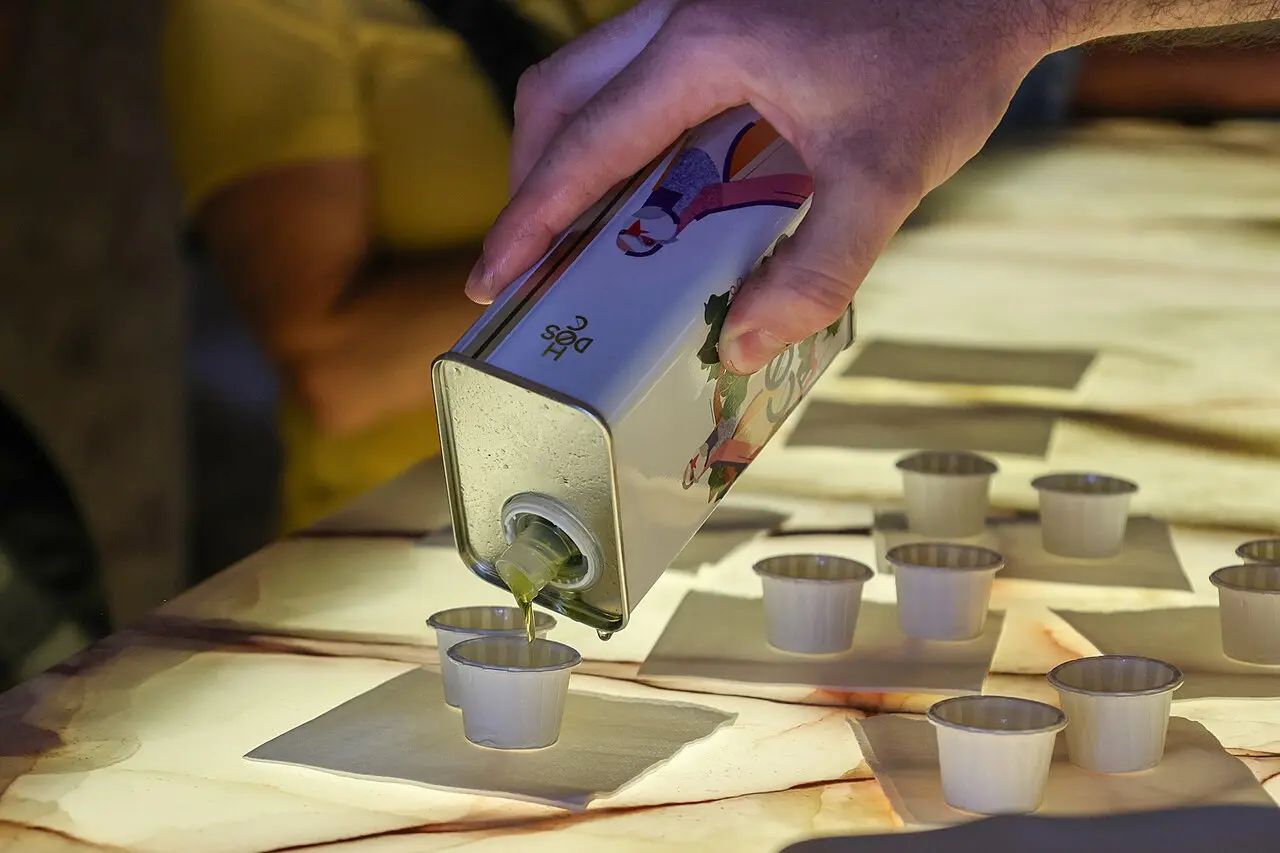
Olive oil is often chosen by the prettiest bottle and poured beneath the loudest garnish. Reverse the order. Taste first, style second. A focused flight of three oils reveals whether you prefer green fruitiness or ripe softness, a clean bitterness or a peppery finish—and it makes the final table far more personal. This is not a laboratory classification and it cannot authenticate a label; only trained, monitored panels using the recognised method do that. It is a home exercise in attention: read what the bottle actually says, hide the branding, taste calmly, then let one oil earn its place at dinner.
Read the legal name, not the romance
Begin with three sealed oils whose labels you can compare. Record the legal category, origin, best-before date, lot or traceability details, package material and any harvest date that is actually declared. Do not treat a single acidity number, a medal or the word ‘premium’ as a complete quality verdict. In EU rules, extra virgin, virgin, refined blends and pomace oil have distinct legal descriptions; origin and some optional claims also follow defined conditions.
Look for storage instructions and a container you can protect from heat and light. The International Olive Council advises keeping olive oil away from excessive heat, air, humidity and especially light. Buy a size your household can finish comfortably, keep the cap clean and tight, and avoid displaying the working bottle beside a hot hob merely because the silhouette looks beautiful.
Build a quiet, blind flight
Ask one person to code the samples A, B and C. Pour a small equal amount into clean, odour-free cups and cover them until tasting. Use the same cup shape for every oil, remove flowers and candles, skip fragrance at the table and keep bread, apple and water nearby as neutral resets. Professional panels use standard covered glasses and controlled conditions; the home version borrows the discipline, not the authority.
Hold one covered cup in your palm for a short moment so the aromas open gently, then swirl without splashing. Smell before looking at colour. The official method centres sensory classification on trained panels and recognised attributes, not on a consumer guessing quality from green or gold. If you want a beautiful colour photograph, make it after the blind notes are finished.
Use three words before twenty
Start with fruitiness: does the aroma suggest green leaf, cut grass, tomato, herbs, apple or riper fruit? Then taste a small sip and notice bitterness on the tongue and pungency as a tactile catch toward the back of the mouth or throat. The IOC defines fruity, bitter and pungent as positive attributes of virgin olive oil. Their presence is not a flaw, and the most intense oil is not automatically the best for every plate.
Write intensity from 0 to 5, one aroma image and one finish word. Then note anything tired or unpleasant without diagnosing the bottle: stale nuts, wax, dampness, vinegar or a flat greasy finish. If a sample seems defective, do not turn a dinner game into a public accusation; preserve the bottle and lot information, compare it calmly and contact the seller or competent authority when appropriate.
Give every finalist the same food
Taste each oil again on identical pieces of plain bread, boiled potato or ripe tomato. This second round asks a different question: not ‘Which oil wins?’ but ‘What does this oil make clearer?’ A delicate sample may let soft cheese or white beans speak; a greener, more bitter oil may sharpen tomato, lentils or grilled vegetables. Record preference by dish rather than creating one permanent ranking.
For the table, serve only the amount needed in a small clean cruet and keep the original labelled container close enough for guests who want to read it. Never mix leftovers back into the bottle. Add salt, citrus, herbs and vinegar only after everyone has tasted the oil alone; otherwise the loudest condiment writes the notes for you.
Dress the table after the verdict
Let the winning oil determine the palette: matte black linen, warm stoneware, olive-leaf green and one brushed-metal detail. Keep the arrangement low so conversation travels. Wear a clean black column or relaxed tailoring, add a muted olive scarf or gold cuff, and choose a soft olive-bronze eye with a neutral lip. During the tasting, perfume stays outside the room; scent returns only after the final scorecard is closed.
At the end, photograph the winning bottle beside its handwritten card, then return it to cool, dark storage. Wash and dry cups and cruet completely before the next use. Keep the scorecards: after three or four flights, they become more useful than trend language because they show the flavours your own table repeatedly chooses.
The luxury of an olive-oil flight is not owning the rarest tin. It is knowing why one bottle belongs with tonight’s food, how to protect it tomorrow and when styling should stop. Read the label, hide the brand, smell before colour, give every sample the same plate—and only then dress the table. The result is quieter than a product display and far more memorable: a preference you can explain.
Editorial sources
- International Olive Council — official sensory method for virgin olive oil, Rev. 11 (checked 16 August 2026)
- International Olive Council — olive-oil gastronomy and storage guidance (checked 16 August 2026)
- European Commission — olive-oil category, origin, storage and optional label rules (checked 16 August 2026)
- Wikimedia Commons — photograph, creator and CC BY 2.0 rights record (checked 16 August 2026)