Nature & Style
Pearls, without the ceremony: a modern edit from nacre to night
How to read luster, choose scale, sharpen pearls with black tailoring, borrow their light for makeup and care for them after the evening ends.
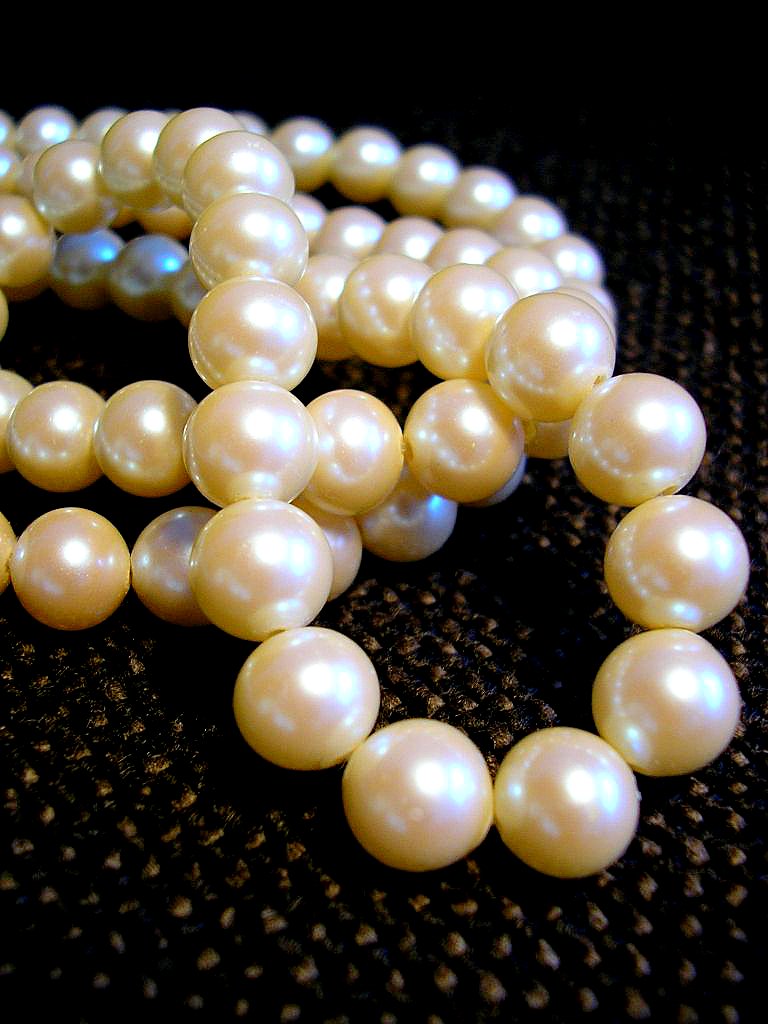
Pearls have spent too long waiting for a ceremony. Their glow is quieter than crystal and warmer than polished metal; that is precisely why they work with clean black lines, fluid modest layers and controlled makeup. This edit begins before styling—with the difference between natural, cultured and imitation pearls—then moves through proportion, clothing, beauty and care. The aim is not to force pearls into a trend, but to remove unnecessary formality and let the material speak.
Read the pearl, not the mythology
Natural pearls form in molluscs without human intervention; cultured pearls also form inside molluscs, but their growth is initiated by people. An imitation is a manufactured pearl-like product. “Cultured” does not mean plastic or false. CIBJO separates the three clearly, and a reputable seller should describe what is being offered rather than relying on romance alone.
Do not let roundness become the only test. GIA evaluates seven factors: size, shape, color, luster, surface, nacre and matching. Begin with luster—the quality and sharpness of reflected light—then ask how the shape and natural surface character serve the design. A luminous baroque pearl can be more compelling than a perfectly round pearl selected without personality.
Choose scale by silhouette
A pearl is small, but it changes the balance around a face. A restrained stud clarifies a strong collar, a drop lengthens the line beside a softly wrapped scarf, and one larger pearl can hold its own against an architectural abaya or cape. View jewellery from conversational distance, not only in a magnifying mirror. If it disappears, increase scale or simplify the fabric; if it dominates before your face does, step back.
Necklines make the same decision. With a high oyster-satin blouse, let the earrings carry the light and keep the throat clean. With an open jacket over a matte layer, a short strand can define the transition between skin, fabric and tailoring. The rule is not earrings versus necklace; it is one clear point of light versus several pieces repeating the same sentence.
Let black do the modernising
Pearls become less ceremonial beside something exact and dark. Try an ivory column beneath an ink-black abaya, a black trouser suit with one irregular drop, or a fluid black dress with a small pearl ring. Contrast gives nacre definition; tailoring removes nostalgia. Adding bouclé, a bow, a matching strand and a formal pump all at once can turn a fresh idea into costume.
Texture matters more than extra colour. Matte crepe makes luster visible; crisp cotton gives it intelligence; satin repeats the glow in a larger field. If the outfit already contains shine, keep jewellery spare. If the clothes are entirely matte, one sculptural baroque form can provide the whole finish. Quiet luxury works when every material has a distinct job.
Borrow nacre’s light for the face
Pearl-inspired makeup should not look frosted. Think of a softly luminous complexion, satin rather than glitter on the lids, taupe or cocoa close to the lashes and a muted rose or warm nude lip. Place light where the face naturally turns toward it—the inner eye, high point of the cheek and centre of the lid—then keep the rest calm. Jewellery should recognise the makeup, not compete with it.
Finish perfume, hair spray and cosmetics before putting pearls on. GIA notes that heat, perfume, cosmetics and acid perspiration can damage their surface, and advises wiping them with a soft cloth after wear. Pearls are therefore the last object added at the mirror and the first removed when you return—a sequence that protects them and keeps the final look edited.
Break the set, keep the intention
Modern styling is often strongest when one expected element is removed. Wear one pearl earring with a small metal stud, pair a short strand with a white shirt and wide black trousers, or place one baroque pearl on a clean chain over knitwear. Asymmetry needs discipline: when jewellery is irregular, keep the neckline and hair controlled so the difference reads as a decision.
For work, choose small pearls, black tailoring, an oyster blouse and a rose-brown lip. For dinner, change only the scale: an irregular drop, clean liner and a deeper berry-rose lip move the same foundation into evening. For weekend coffee, wear one pendant over a fine black knit with denim or relaxed trousers. Pearls become useful when they stop waiting for an invitation.
Care is part of the edit
After wear, use a clean, soft cloth and store pearls away from harder jewellery that could scratch them. A lined compartment or separate soft pouch is more useful than an impressive box with everything touching. Do not assume that a cleaning method suitable for diamonds or metal is suitable for pearls; follow the seller’s instructions and ask a qualified jeweller when a strand, setting or clasp needs attention.
Before an important evening, check the clasp, posts and strand rather than polishing in a rush. Care should be preventive and quiet: cosmetics first, pearls last; pearls first off, then a gentle wipe and separate storage. Handled thoughtfully, one piece can return to very different wardrobes without becoming trapped in one occasion.
The modern pearl is not a rebellion against heritage. It is heritage with better editing: understand the material, choose luster and character, give it a clean silhouette and let one point of light do enough. Worn this way, pearls do not ask where the ceremony is. They simply belong wherever the woman wearing them has decided to go.