People & Craft
The Sadu line: what women weavers teach a modern black wardrobe
A close reading of rhythm, restraint and the hand behind the cloth—with a practical edit for wearing, buying and caring for woven pieces respectfully.
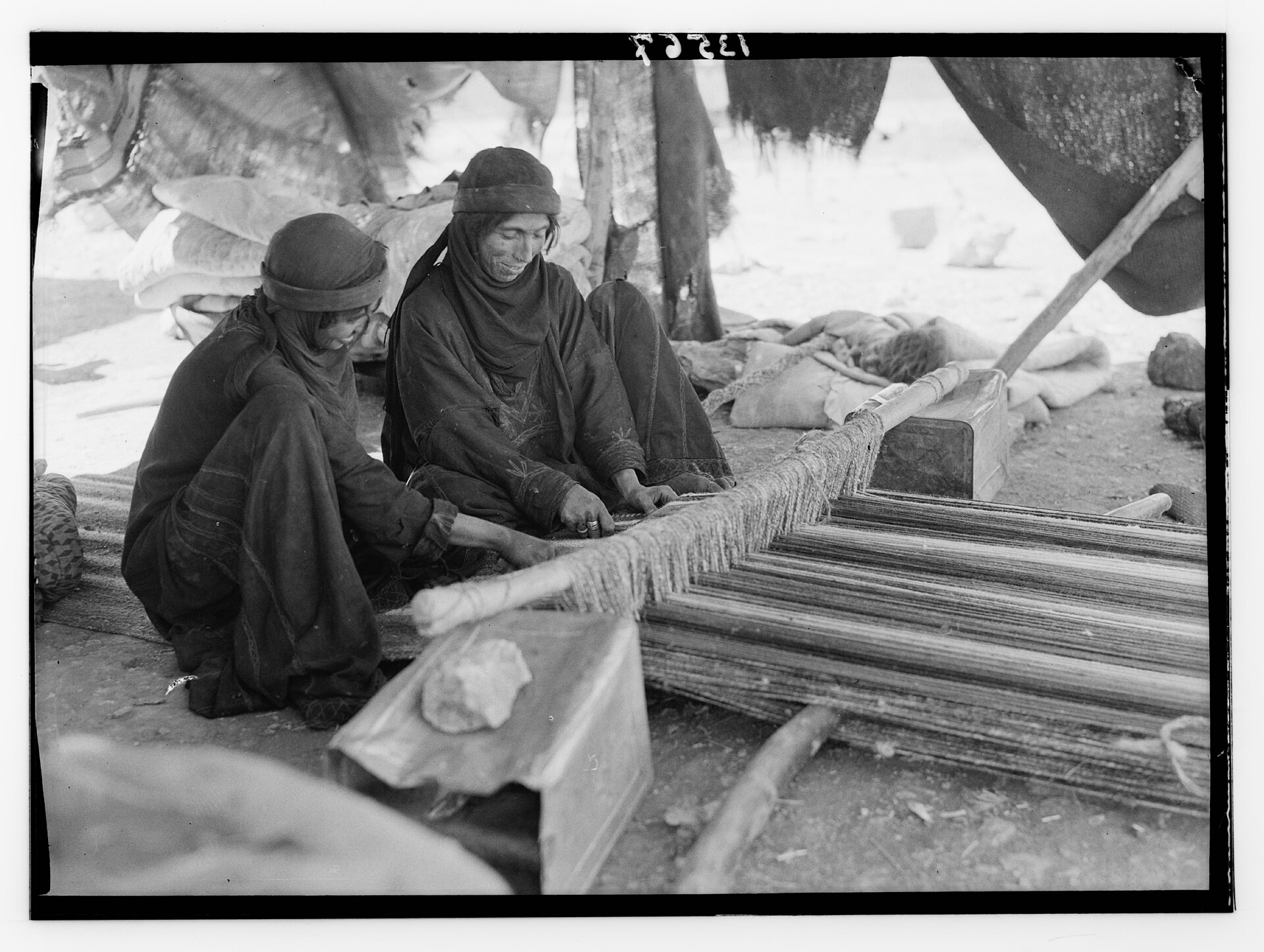
Before Al Sadu becomes a motif on a moodboard, it is a practice held in hands. Bedouin women build a tightly woven textile on a ground loom, turning fibres, geometry and repetition into something durable enough for daily life and eloquent enough to carry memory. UNESCO first inscribed the shared Saudi–Kuwaiti tradition in 2020; the listing was extended to include Qatar in 2025. The important word is not ‘trend’ but transmission. This edit asks what a modern black wardrobe can learn from the weaver’s discipline—and how to admire craft without flattening it into decoration.
Begin with the maker, not the motif
A geometric band is easy to recognise and easy to copy badly. Al Sadu is more than a collection of diamonds and lines: UNESCO describes a warp-faced plain weave made on a ground loom, with rhythmic repetition, symmetry and colours drawn into conversation with the desert environment. Its quality depends on spinning, weaving and the expertise of the person doing both. The pattern is therefore evidence of decisions, not a free-floating print.
When considering a contemporary piece, ask who made the woven element, where it was made, what material was used and whether the maker or community is named. Clear provenance does not require a theatrical origin story. A short, specific answer is more valuable than pages of anonymous ‘heritage-inspired’ language. Respect begins when the hand is visible in the description and fairly valued in the price.
Read rhythm the way you read tailoring
The strongest Sadu compositions do not need to shout. Narrow lines establish pace; larger geometric forms create pauses; repeated colour gives the eye a route through the cloth. Read it as you would a beautifully cut black coat: where does the line begin, where does it change direction, and where has the maker allowed stillness? This turns looking into attention rather than instant consumption.
For a wardrobe, scale is the first edit. A narrow woven cuff, belt or bag panel can sharpen a generous black silhouette. A larger textile panel needs quieter clothing around it: matte crepe, clean shoulders, restrained jewellery and one uninterrupted field of black. Avoid stacking several unrelated craft references. One articulate piece has more presence when it is not forced to compete for cultural meaning.
Let black provide the frame
Black works because it absorbs visual noise and makes fibre, relief and colour easier to see. Pair a long black column with one ochre-and-red woven detail; place a short crafted jacket over a black silk or cotton base; or carry a structured bag whose textile panel is the only pattern in the look. The objective is not to make tradition look ‘modern’. It is already alive. The black frame simply gives the eye enough calm to notice the workmanship.
Beauty can echo the same restraint without borrowing the pattern literally. Choose satin skin rather than high glitter, a softly smoked brown eye, groomed brows and a muted brick, rosewood or warm nude lip. If the textile carries bright red or orange, repeating the exact colour on eyes, cheeks and lips can feel illustrative. One tonal response is enough. The face should belong to the woman, not perform as a matching accessory.
Buy with four useful questions
First: is the woven component handmade, machine-made or digitally printed? None of those categories is automatically dishonest, but they should not be priced or described as if they were the same. Second: who receives credit? Third: how is the piece attached to the garment, and can it be repaired or removed without destroying the cloth? Fourth: what care instructions follow from the actual fibres and dyes? Precise answers are a form of luxury because they make future ownership possible.
Look closely at the reverse, edges and joins. A handwoven surface may carry variation; variation alone is neither proof of authenticity nor a defect. What matters is whether the construction is secure and whether the seller can explain it. If a maker-led piece costs more than a generic print, the comparison should include labour, knowledge and continuity—not only square centimetres of fabric.
Care for the textile you actually own
Do not improvise a wash because a woven piece looks robust. Follow the maker’s instructions, identify the fibre and dyes, and consult a textile conservator for valuable, historic or fragile work. Preventive care is gentler than heroic cleaning: handle with clean hands, keep food, perfume and makeup away, limit bright light and protect the surface from dust and snags. A contemporary garment and an older textile may need completely different treatment.
For an important flat textile, conservation guidance favours support, minimal folding and protection from light and dust; acid-free tissue and a suitable box may help when the object and its condition make flat storage appropriate. Do not hang heavy or weakened woven work from one edge, staple it to a wall or place adhesive directly on it. Keep a simple record of the maker, purchase date, fibres, dimensions and care advice. Memory is safer when it is written down.
Wear the relationship, not a costume
A respectful look does not need to explain itself to everyone in the room. Wear the piece repeatedly, learn the maker’s name, resist calling every geometric textile ‘Sadu’, and say when an item is only inspired by the visual language rather than made within the practice. Accuracy is not stiffness; it is how admiration remains connected to people.
The best styling decision may be the smallest: one woven belt over an old black abaya, a crafted panel on a bag carried for years, or a textile displayed at home with enough space around it to be seen. Repetition builds relationship. The object stops being a theme and becomes part of a life—the same transition that turns clothing into personal style.
The lesson of Al Sadu is not that every wardrobe needs a desert geometry. It is that a line gains meaning through the hand, the rhythm and the knowledge behind it. Begin with the maker, edit the silhouette, ask precise questions and care for the object according to what it is. Then black is no longer the absence of colour. It becomes a generous frame for craft—and for the women whose expertise keeps the line moving forward.
Editorial sources
- UNESCO — Traditional weaving of Al Sadu, current Representative List entry (checked 2 August 2026)
- UNESCO — 2020 inscription decision for Saudi Arabia and Kuwait (checked 2 August 2026)
- Saudi Heritage Commission — intangible heritage and handicraft sectors (checked 2 August 2026)
- Canadian Conservation Institute — preventive care for textiles and costumes (checked 2 August 2026)