People & Fashion
Jeanne Lanvin’s full skirt: borrow the volume, keep your own life
How the robe de style suggests a modern way to wear a full skirt: choose one generous shape, test it in motion and let the rest of the evening breathe.
A full skirt makes an entrance before you have decided what to say. That is part of its pleasure—and part of the styling problem. Jeanne Lanvin’s robe de style offers a useful thought: volume can be the composition, rather than a demand for more decoration. Here is how to take that idea into a contemporary wardrobe without turning dinner into a period performance.
A silhouette with room for a different idea
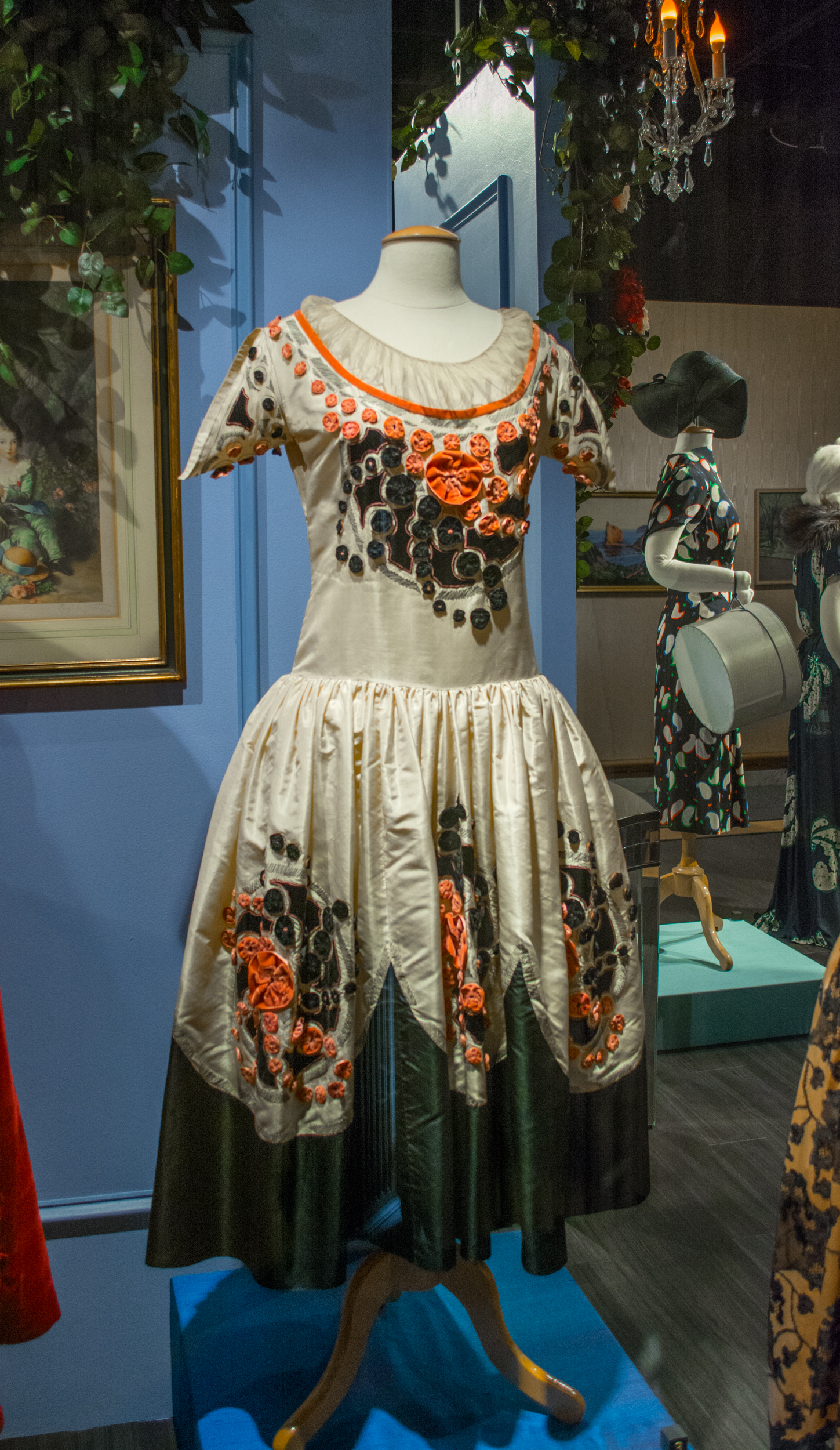
The Metropolitan Museum of Art describes Lanvin’s full-skirted designs from the early 1910s and the robes de style that became associated with her in the 1920s. Their pannier-like forms recalled eighteenth-century dress, while delicate materials gave them a contemporary character. This was a different proposition from a narrowly straight silhouette: the skirt could occupy space.
The real photograph here shows a 1928 example photographed by Tim Evanson, not the Met’s 1926–27 object discussed in our source. Look at the contrast between the relatively contained upper body and the spreading skirt. That visual relationship is our starting point, not a claim that every modern full skirt descends directly from Lanvin.
Choose the place where the volume begins
Try three outlines before looking for accessories: fullness released at the waist, fullness beginning lower over the hip, and a softer skirt that gathers its width mainly near the hem. They can feel quite different even in the same colour. The useful question is which one gives the movement and outline you enjoy—not which one supposedly corrects your body.
Check the side view as carefully as the front. A stiff fabric may keep a sculptural arc; a softer one may settle closer to you when still and open as you walk. Read the garment’s actual fibre and care label. “Satin” describes a weave, so it does not by itself tell you the fibre, weight or care requirements.
Give the skirt one quiet partner
Start with a smooth, comfortable top whose hem or tuck does not bunch under the waistband. You can use a fitted knit, a softly shaped shirt or a long-sleeved blouse; fitted need not mean tight, and modest coverage need not mean adding equal volume everywhere. Test your intended outer layer with the skirt, too.
Our editorial preference is one main event. If the skirt is broad and lustrous, try a matte top. If it is patterned, repeat one of its colours above the waist. A narrow shoe shape can create visual continuity, but flats are entirely compatible with a generous skirt. Decide by walking in the actual pair, not by an imagined rule that drama requires heels.
An original black-on-black dinner edit
Picture a black mid-calf skirt with moderate fullness, an opaque fine knit with long sleeves, familiar flat shoes and a small bag that stays clear of the hip. This is a proposed outfit, not a report of a fitting we performed. The interest comes from the difference between the knit’s quiet surface and the skirt’s moving outline.
Choose either a defined lip or a softly emphasized eye if you want one makeup focal point. This is a styling option, not a promise about how a face should look. Put a clean tissue between your face and the neckline when dressing if helpful, and follow the garment’s care instructions if makeup transfers; do not improvise a solvent on a delicate fabric.
The five-minute fitting that matters more than another purchase
With the complete outfit on, sit in a chair, stand, climb a few steps and reach for your bag. Check whether the waistband stays comfortable, the lining allows your stride and the hem clears the shoes. Test any pockets with the few things you actually carry. If the skirt has a train or rigid side volume, think through the seating and transport you will really use.
Photograph the front and side in ordinary light for your own comparison. Then remove one accessory and look again. Write down the one unresolved issue—waist, length, opacity or movement—before ordering a replacement item. A simple alteration may help, but ask a professional what the actual construction permits before assuming it is easy.
Borrow a principle, not a museum object
Historic dress can give us a language for proportion without supplying a uniform. You do not need panniers, vintage silk or a couture budget to explore the relationship between a contained top and an expansive skirt. Equally, a museum photograph cannot guarantee the construction or quality of a contemporary listing.
Keep a small fitting note: intended occasion, skirt shape, top that works, shoes tested and one remaining question. That is more useful than saving twenty nearly identical shopping links. The aim is an outfit that feels resolved when you move, sit and talk—not only when you stand still for a photograph.
Lanvin’s lesson, as we read it, is permission to let a silhouette carry the evening. Give the skirt space, give yourself comfortable movement, and leave the costume in the history book.