Food & Hosting
The saffron table: a modern Saudi ritual of welcome
Dates, coffee, rose and a sense of occasion—how to create a generous table that feels refined, personal and beautifully unforced.
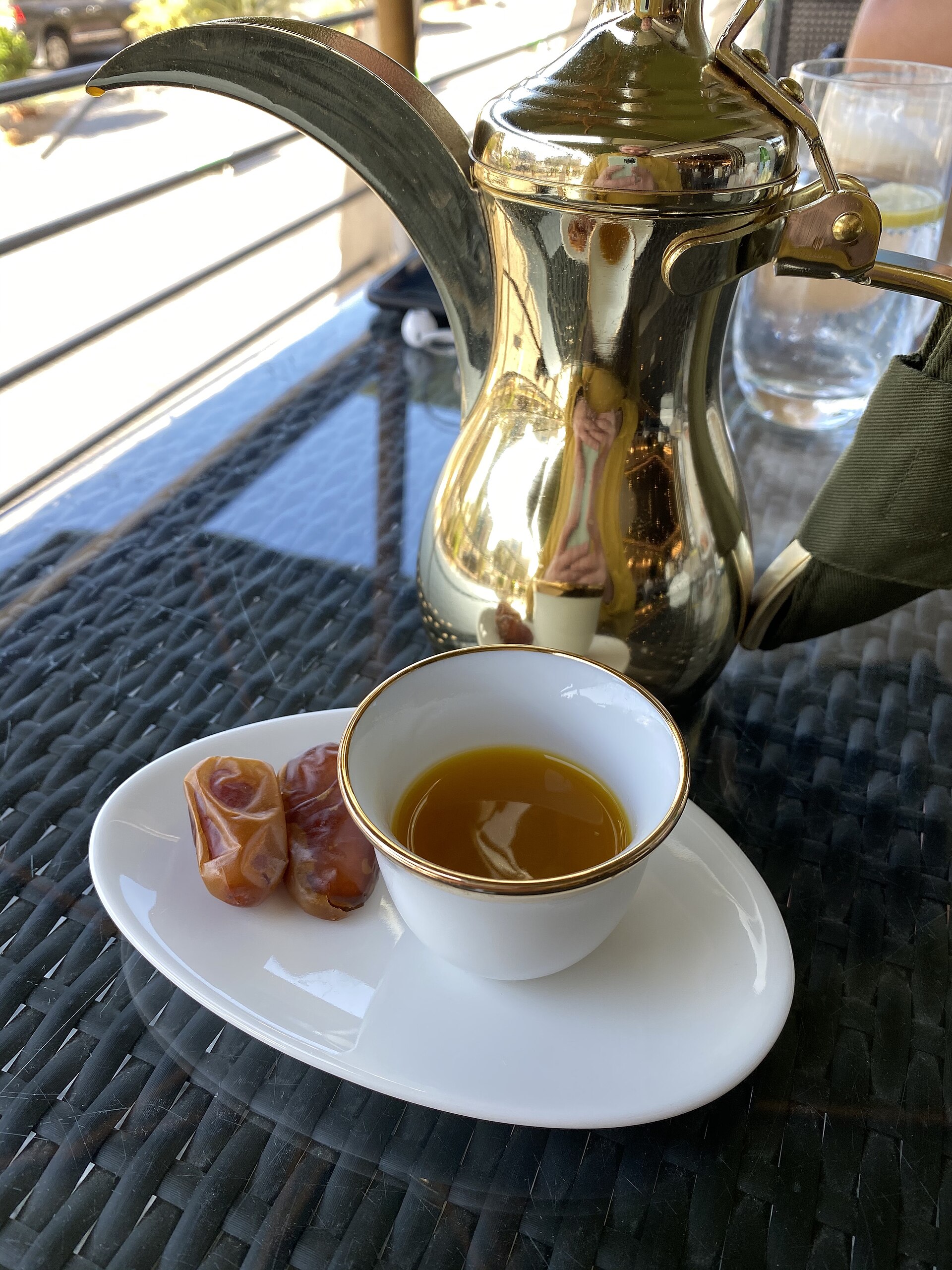
Hospitality is one of the most elegant forms of self-expression. Long before the flowers, the linen or the final plate arrives, a table communicates something simple: you were expected, and your presence matters. The most memorable Saudi tables hold that generosity at their centre while allowing the details around it to feel fresh.
Begin with the welcome
A polished gathering does not need to announce itself with excess. Start with the first gesture—a small cup of Arabic coffee, a beautiful bowl of dates, cool water scented lightly with citrus or mint. These familiar rituals create warmth immediately. Their power comes from attention, not abundance.
Think of the arrival as the opening note of the evening. Keep the entrance calm, the lighting soft and the first offering easy to accept. Guests should feel cared for without feeling managed. That balance is the foundation of quiet luxury at home.
Build a restrained palette
Choose two or three materials and allow them to repeat. Black stone beside hand-finished ceramic feels grounded; cream linen softens the setting; a small touch of brushed brass adds warmth. When every object competes for attention, the food disappears. When the palette is disciplined, texture becomes the decoration.
The same principle applies to colour. Saffron gold, date brown, pistachio green and rose are already richly expressive. Let ingredients supply the accent tones rather than adding unnecessary ornament. A few petals or a single low arrangement can be more effective than a crowded centrepiece.
Serve food with rhythm
A generous menu can still feel edited. Create rhythm by moving from small, bright flavours to deeper and more comforting ones, then finish with something fragrant rather than overly heavy. The sequence matters as much as the number of dishes because it gives the evening a natural pace.
Family-style serving encourages conversation, while individually plated elements bring a sense of ceremony. Mixing the two creates ease without losing polish. Use platters for dishes meant to be shared and reserve the composed plate for one memorable course.
Leave room for personality
The detail guests remember is often the least expensive: a handwritten place card, a family recipe, a playlist chosen with care or coffee poured by the host. These gestures cannot be purchased as a set. They are the difference between a beautiful table and a personal one.
Perfection can make a gathering feel distant. Keep one element relaxed—a stack of linen napkins, a casually placed bowl of fruit, bread passed from hand to hand. Elegance becomes inviting when it leaves space for people to live inside it.
The modern Saudi table is not a rejection of tradition, but a confident edit of it. Keep the generosity, honour the ritual and choose every visible detail with intention. The result will feel timeless because it begins with what hospitality has always meant: making another person feel at home.