Nature & Style
Black at the waterline: a low-impact mangrove edit
A field guide to reading the tide, dressing with quiet structure, editing beauty for salt air and leaving a tidal forest exactly as you found it.
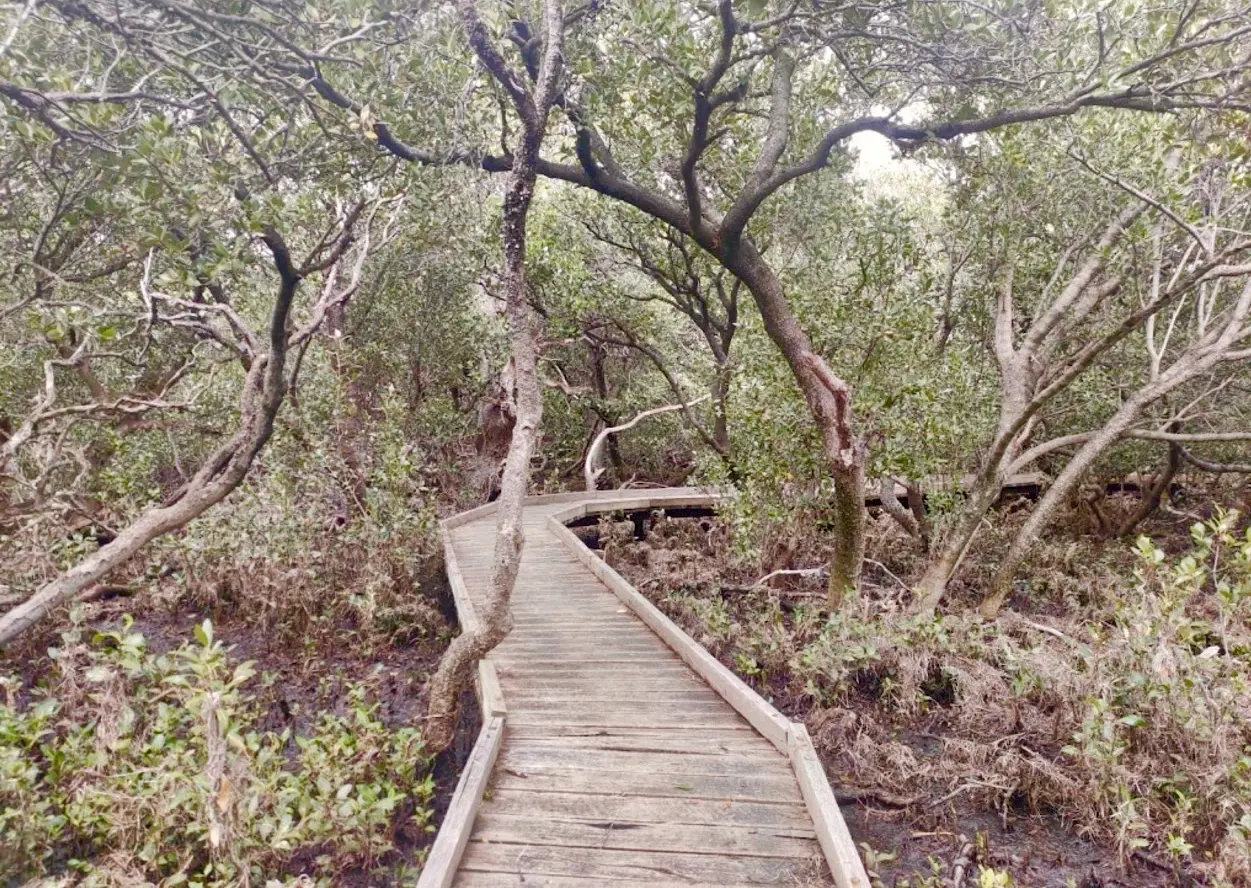
Mangroves do not offer the polished horizon of a resort beach. Their beauty is tidal, intricate and close to the ground: roots, silt, reflected leaves and the small movements that appear only when a visitor becomes still. The correct BlackFab wardrobe for this landscape is not safari theatre. It is a restrained field edit that keeps hems clear, hands free and attention on the habitat. In Saudi Arabia, UNESCO records mangrove stands across the Farasan biosphere reserve, while the National Center for Wildlife describes coastal mangroves as sensitive shelter for birds, young fish and crustaceans. That is the brief: arrive composed, move lightly and leave no styling decision for the forest to absorb.
Read the place before choosing the palette
A mangrove visit begins with the authorised route, not the outfit. Check the managing authority or operator for access, tide, weather, transport, footwear and photography rules on the exact day. A boardwalk, small boat and guided shoreline each demand a different bag and silhouette. Do not infer access from a beautiful photograph, and do not improvise a path because the water appears shallow.
The landscape is more than a backdrop. UNESCO notes that mangroves occur on at least fifteen northern islands in the Farasan archipelago and that, with seagrass and reefs, they stabilise coasts, trap sediment and support nursery habitat. The Saudi National Center for Wildlife defines ecotourism as enjoying and learning from nature without harming it. Let those facts set the dress code: modest scale, small group, local instruction and no performance that outranks the place.
Follow the boardwalk, not the photograph
Where a boardwalk or marked route exists, remain on it. Roots and mud are not styling platforms, branches are not props and shells, leaves or drift material are not souvenirs unless the authority explicitly says otherwise. Keep voices low, give wildlife distance and let a guide decide where stopping is appropriate. The most valuable image may be the one made without moving a single thing.
Build a five-frame story instead of chasing one heroic portrait: the entrance sign, the wide habitat, a root pattern from the permitted path, a reflection and one quiet human detail such as a hand on a bag strap. Never block the route for a photograph. If another visitor, boat or animal enters the composition, wait rather than directing the scene. Editorial restraint is useful conservation etiquette.
Wear a black line with field intelligence
Choose a breathable, easy-moving black base with a hem that cannot trail into mud or catch on a narrow passage: relaxed trousers with a long shirt, a compact abaya or a column dress shortened to the conditions. Add one mineral accent—mangrove green, salt grey or weathered wood—in a scarf or small cross-body bag. Matte textures belong here because they hold the visual line without turning the visit into eveningwear.
Footwear is an operator decision disguised as a fashion decision. Use the secure, washable and route-appropriate shoe the organiser recommends; a raised dry boardwalk is not the same as a wet landing. Avoid unstable heels, loose jewellery and anything that can fall into the habitat. Keep both hands available for rails, boarding and your own belongings. Quiet luxury begins with not needing someone else to manage your outfit.
Edit beauty for air, salt and proximity
The beauty brief is familiar, contained and low-scent. Apply the products you already tolerate before departure, follow every label and use shade, clothing and a packable brim according to local conditions. Keep the arrival kit small: lip care, one complexion touch-up, brow product and blotting paper if these are already part of your routine. A moving boat or narrow boardwalk is not a dressing table.
Skip fragrance clouds, aerosol touch-ups and experiments that require washing off in the field. Do not market a cosmetic as 'reef-safe' or 'eco-safe' unless its claim is properly substantiated; the simpler editorial choice is to minimise what you carry and prevent every cap, wipe and applicator from escaping. This is cosmetic and styling guidance, not medical advice—follow local safety information and seek professional advice for individual health needs.
Give the ending as much thought as the entrance
Use a small dry bag or sealed pouch for phone, ticket and essentials, then a separate pocket for anything damp or used. Count your items before leaving: phone, glasses, jewellery, bottle, cosmetics, tissues and every wrapper. Pack out what you brought in, including biodegradable-looking items. Natural appearance does not make an object part of that ecosystem.
At the exit, clean footwear only at the designated place, note the habitat or species you want to learn about and credit the reserve, guide and photographer accurately when posting. Avoid precise wildlife locations if the managing authority asks visitors not to share them. The final image should feel like the visit itself: black against green, beautifully composed, with no broken branch, abandoned cap or displaced creature outside the frame.
Mangroves reward a quieter definition of luxury. Read the tide, trust the marked route, shorten the hem, lower the scent and make the photograph without rearranging the world. When the outfit supports the visit rather than competing with it, black becomes a clean line through green—and the forest keeps every detail that made it worth seeing.
Editorial sources
- UNESCO — Juzur Farasan Biosphere Reserve, mangrove distribution and ecosystem functions (checked 13 August 2026)
- Saudi National Center for Wildlife — ecotourism principles and sensitive coastal habitats (checked 13 August 2026)
- Saudi National Center for Wildlife — protected areas and marine ecosystems (checked 13 August 2026)
- Wikimedia Commons — photograph, creator and CC0 1.0 rights record (checked 13 August 2026)