Places & Style
The glasshouse edit: dress for two climates at Kew
A practical Palm House visit built around removable layers, a small bag and time to look—plus the renovation dates to check before you go.
A winter coat looks perfectly sensible outside a glasshouse. A few steps later, it can become the most inconvenient object you own. That small change of climate is the starting point for a more considered Kew visit: an outfit that can change with you, a bag you can actually carry and enough unhurried attention for the plants. This is a planning guide, not a report of a visit we made.
Start with the living building, not the photograph
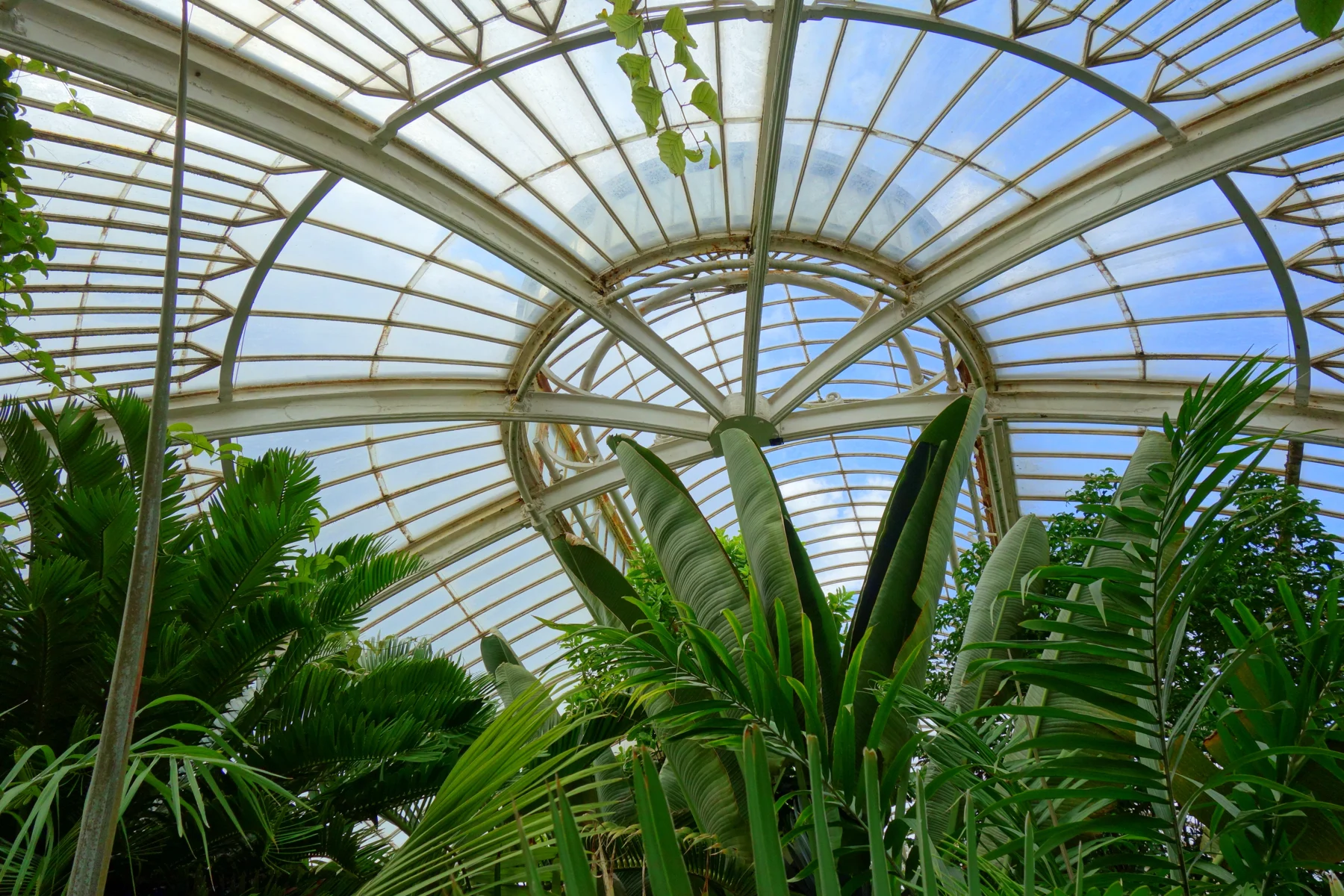
Kew describes the Palm House as a living rainforest in London. Its official visitor page says the building remains open ahead of planned renovation in 2027, while horticulturists begin moving plants. The photograph here was taken by Daderot on 24 May 2024. It documents a real interior at that time; it cannot promise that the same planting or route will await you today.
As checked on 12 November 2026, Kew’s project page announces a closure in February 2027 for the final plant move, a temporary summer reopening to show the empty building, then full renovation closure in autumn 2027. Treat those as published plans, not fixed guarantees. Check the current project and planned-closures pages before booking a trip around this one attraction.
Give your coat somewhere to go
Our styling proposal is a dark, comfortable base with a genuinely removable outer layer. Try a smooth long-sleeved top, trousers with an unrestrictive stride and a coat you can carry folded over an arm. A skirt can work too, provided its hem stays clear of your shoes and the route. This is an editorial outfit idea, not a claim that a particular fibre controls body temperature.
Rehearse the transition at home: take off the coat, hold it, open the bag and retrieve the phone. If you need three hands, reduce the load. Kew’s closures page says there are no lockers or baggage-storage facilities. Do not plan to leave a suitcase, spare shoes or a bulky styling kit at the gate and assume somebody will solve it.
Let the shoes and bag finish the line
A clean black shoe and an adjustable small crossbody bag can keep an outfit visually composed while leaving hands freer. Choose shoes you have already walked in comfortably; a photograph cannot tell you how a sole will feel on the day. Keep trailing scarves, loose straps and long hems under control, especially if using stairs. Follow the actual access signs and staff guidance.
For makeup, consider one familiar emphasis rather than packing a second routine: a defined lip or softly outlined eyes, according to your preference. No formula is guaranteed to survive a warm, humid interior. Carry only what you normally need for a modest touch-up and use it away from displays and narrow passages. The point is to look at the glasshouse rather than turn it into a dressing room.
A small route that makes room for looking
Use a three-stop observation exercise: first the building’s structure, then the outline of one leaf, then a label that changes your understanding of a plant. Write down the named plant and one question rather than inventing an identification from appearance. This is our original way to organize attention, not an official Kew trail.
Keep the upper walkway optional. A pleasing visit need not include every staircase, and access may change. Step aside only where permitted if you want to stop, sketch or take a personal photograph. Do not touch, move or lean on plants to improve a composition. An elegant black sleeve against green is no reason to treat a living collection as a prop.
Distinguish a visit from a fashion shoot
Kew’s rules prohibit professional camera equipment without a valid permit and say commercial activity needs authorization. Its photography information also distinguishes personal-use permits from commercial permissions. A standard admission ticket should not be read as approval for a brand campaign, a client shoot or a full set of equipment. Ask Kew about the exact proposed activity before arranging one.
For a personal memory, keep the equipment and your expectations simple, respect other visitors and follow current instructions. The legally reusable photograph in this article is credited to its photographer under CC0; its reuse is not an invitation to ignore the venue’s rules for your own visit. Image copyright and permission to conduct a shoot are separate questions.
Your departure card: five decisions
Before leaving, record these five answers: is the Palm House accessible on your date; what are that day’s attraction hours; which entrance will you use; where will your removed layer go; and what is your alternative if access changes? Check opening times separately from the general Gardens ticket: Kew notes that attraction times vary and occasional closures occur. We deliberately do not hard-code a price or a year-round timetable here.
For example, a reader planning an afternoon in late autumn might choose a single glasshouse focus and a nearby pause rather than promise herself several distant stops before an early closing. This is a hypothetical planning example. Build the day from the actual hours and your walking pace, then choose the outfit that supports it—not the other way round.
The best glasshouse edit leaves you with fewer things to manage and more things to notice. Take a layer you can remove, a plan you can revise and the patience to let one leaf interrupt the itinerary.